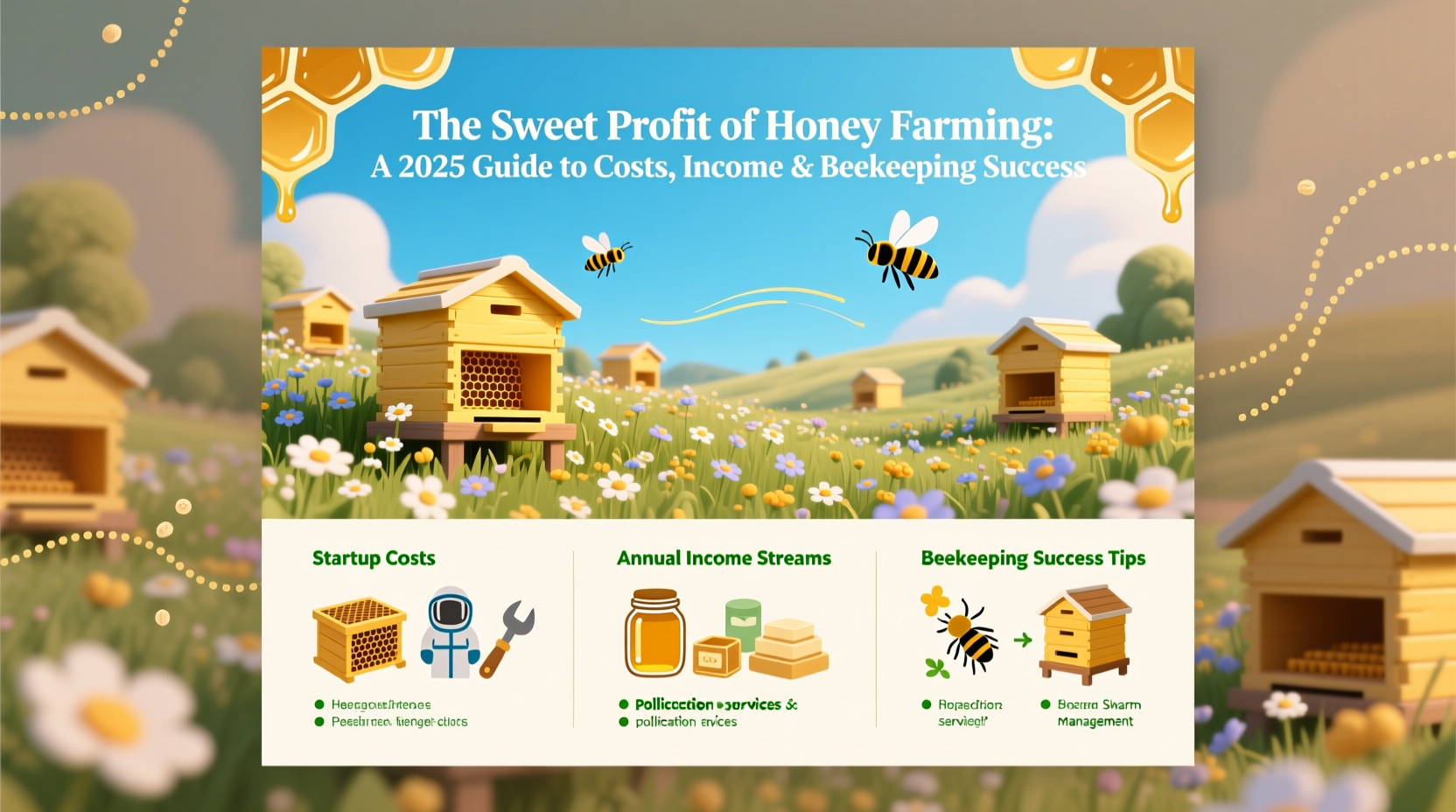
Part 1: What is the Profit of Honey Farming? Uncovering a Golden Opportunity
(Blog Article Body – Rich Text)
Have you ever sat in your garden, listening to the gentle hum of bees buzzing from flower to flower, and wondered if that soothing sound could actually be the sound of money? The idea of turning a passion for nature and a love for golden, sticky honey into a profitable business is a dream for many. But is honey farming truly profitable, or is it just a romanticized hobby?
The short answer is a resounding yes, honey farming can be a highly profitable venture. However, it’s not as simple as plopping down some hives and waiting for the cash to roll in. The profit in honey farming is a sweet blend of careful planning, hard work, understanding your costs, and maximizing diverse income streams.
In this ultimate guide, we’re going to move beyond the surface and dive deep into the real numbers, the challenges, and the strategies that separate a successful honey farming business from a failed hobby. Let’s follow the bees and find the money!
- The Allure of the Hive: Why Consider Honey Farming?
Before we crunch the numbers, it’s important to understand why so many people are drawn to this unique agricultural pursuit.
1.1. A Growing Market for Natural Products
The global demand for natural,organic, and locally-produced food is skyrocketing. Honey sits proudly at the center of this trend. It’s not just a sweetener; it’s perceived as a health food, a remedy, and a gourmet ingredient. This consumer shift creates a robust and growing market for quality honey.
1.2. Multiple Streams of Income
This is the golden secret of profitable beekeeping.While honey is the main event, it’s far from the only product a hive can produce. A savvy beekeeper can generate revenue from:
· Beeswax for candles, cosmetics, and food wraps.
· Pollen as a dietary supplement.
· Propolis, a resin-like substance with health applications.
· Royal jelly, a high-value superfood.
· Pollination Services: This is often more profitable than the honey itself. Farmers pay beekeepers to place hives in their orchards and fields to pollinate crops like almonds, blueberries, and apples.
1.3. Low Startup Costs (Compared to Other Livestock)
You don’t need vast tracts of land to start beekeeping.A small corner of a backyard or a rural plot can support several hives. The initial investment in equipment and bees is relatively modest, especially when compared to starting a cattle or poultry farm.
1.4. Environmental Stewardship
There’s an immense personal satisfaction in knowing you are contributing to the health of the environment.Bees are critical pollinators, and by maintaining healthy hives, you are directly supporting local ecosystems and food production. It’s a business that feels good for the soul.
- The Sting of Reality: Crucial Factors That Determine Your Profit
Your profit isn’t a fixed number. It swings wildly based on several key factors. Ignoring these is the fastest way to get stung financially.
2.1. Geographic Location and Climate
Where you live is arguably the most significant factor.
· Nectar Flow: Different regions have different “nectar flows” – periods when local plants are in bloom and producing nectar. A long, strong nectar flow means more honey. Beekeepers in the northern plains of the U.S., for example, often have higher honey yields than those in some southern regions with different flora.
· Climate: Harsh winters can lead to higher bee mortality, requiring more investment in winterizing hives or replacing deadouts (dead colonies) in the spring. Mild climates allow for longer foraging seasons.
2.2. Scale of Your Operation
Are you ahobbyist (1-10 hives), a sideline beekeeper (10-50 hives), or a commercial operator (50+ hives)? Economies of scale apply here.
· Hobbyist: May not turn a net profit after accounting for equipment costs for the first year or two. Profit is often measured in jars of “free” honey for personal use.
· Sideline: Can generate a significant secondary income, often $2,000 – $10,000+ annually.
· Commercial: This is a full-time business with the potential for six-figure incomes, but it requires immense dedication, significant capital, and business acumen.
2.3. Your Skill and Knowledge as a Beekeeper
Beekeeping is a skill.A knowledgeable beekeeper will have stronger, healthier colonies that produce more honey and require less intervention. They know how to prevent swarming, manage pests and diseases, and properly overwinter their hives. A novice will face more colony losses, which directly cuts into profits.
2.4. The Health of Your Bees
This cannot be overstated.The single biggest threat to profitability is poor hive health. Issues like:
· Varroa Mites: These are public enemy number one for beekeepers worldwide. Uncontrolled infestations will decimate a colony.
· Pesticide Exposure
· Diseases like American Foulbrood
…can wipe out your investment overnight.Proactive hive management is non-negotiable for profit.
- The Initial Investment: Cracking Open the Wallet
Let’s get into the real data. What does it actually cost to start? These are average 2024 costs in the U.S.
3.1. The Essential Startup Costs (for one hive)
· Hive Components (Langstroth is most common): A basic setup (bottom board, brood chamber, honey supers, frames, foundation, inner cover, telescoping lid) will cost between $200 – $300.
· A Nucleus Colony (a “nuc”) or Package of Bees: A “nuc” is a small, established colony with a laying queen. A “package” is a box of bees with a queen. A nuc is generally preferred for beginners as it gives them a head start.
· Package of Bees: $150 – $200
· Nucleus Colony: $180 – $250
· Protective Gear: A bee suit or jacket and veil. $80 – $200.
· Basic Tools: A hive tool and a smoker. $30 – $50.
Total Estimated Startup Cost for Hive #1: ~$460 – $750
It’s important to note that your first hive will always be the most expensive because of these initial equipment purchases.
A Realistic Startup Cost Table for Year 1:
Item Low-End Cost High-End Cost Notes
1 Complete Hive Setup $200 $300 Wooden, unpainted
1 Nucleus Colony $180 $250 Strongly recommended
Protective Suit $80 $200 Essential for beginners
Hive Tool & Smoker $30 $50
Total for 1 Hive $490 $800
Total for 2 Hives ~$800 ~$1,300 You can share some tools/suit, and buying in bulk reduces per-hive cost.
3.2. The Hidden & Recurring Costs
· Feed: Sugar for syrup in early spring and fall. (~$20-$50/year/hive)
· Medication/Treatments: For Varroa mites. (~$15-$30/year/hive)
· Bottles & Labels: For selling your honey. (~$0.50 – $1.50 per jar)
· Extraction Equipment: This is the big one. A manual honey extractor, uncapping tank, and filters can cost $500 – $2,000+.
· Pro Tip: Many local beekeeping associations have extraction equipment that members can rent or use for free. This is a massive cost-saver for beginners.
In the next part, we will dive into the exciting part: the revenue. We’ll break down exactly how much money you can make from honey, beeswax, and the incredibly lucrative business of pollination services. We’ll also introduce our first real-world case study: “Sarah’s Sideline Hives.”
Part 2: The Sweet Reward – Unlocking Your Honey Farm’s Revenue Streams
Welcome back to our deep dive into the profitability of honey farming! In Part 1, we covered the why and the initial costs. Now, let’s get to the most exciting part: the money coming in. A successful honey farm is like a well-managed hive itself—it thrives on diversity. Let’s explore the many ways your hives can generate income.
- The Honey Pot: Your Primary Revenue Stream
Honey is the cornerstone of your business. But how much can you actually expect to make?
4.1. How Much Honey Does One Hive Produce?
This is the million-dollar question,and the answer is: it depends. We already discussed factors like location and beekeeper skill, but let’s look at some realistic averages.
· Poor Year/Unhealthy Hive: 0-30 lbs (The hive might just be surviving, not thriving).
· Average Year/Healthy Hive: 30-60 lbs (A solid, expected yield for a well-managed hive in a decent location).
· Excellent Year/Strong Hive in Prime Location: 60-100+ lbs (This is what every beekeeper strives for).
Important Note: A hive needs to produce about 50-80 pounds of honey just to sustain itself through the winter. Anything harvested is the surplus that the bees won’t need. A responsible beekeeper never takes all the honey.
4.2. How Much Can You Sell Your Honey For?
The price per pound varies dramatically based on how you sell it.
· Wholesale (Selling in Bulk to Packers): $2.00 – $4.00 per pound. This is low-margin and typically for operations with hundreds of hives.
· Local Farmers’ Markets & Roadside Stands: $8.00 – $12.00 per pound. This is where you start seeing real profit.
· Specialty & Gourmet Retailers: $10.00 – $15.00 per pound. Think glass jars, beautiful labels, and a compelling local story.
· Online Direct-to-Consumer: $12.00 – $20.00+ per pound. After accounting for shipping and packaging, your net may be similar to farmers’ markets, but your reach is wider.
4.3. Let’s Do the Math: Projected Honey Revenue per Hive
Let’s take a conservative approach. Assume one healthy hive produces a 40-pound surplus of honey in a year. You sell it all at a farmers’ market for an average of $10 per pound.
· Gross Revenue per Hive from Honey: 40 lbs x $10/lb = $400
Now, remember our startup cost for that first hive was around $600? In its first year, that hive might not fully pay for itself. But the following year, your only costs are maintenance (feed, medication) and your time. The initial equipment investment lasts for years. This is where the profit compound begins.
- Beyond the Honey: The Goldmine of Secondary Products
If you only sell honey, you’re leaving money on the table. Here’s how to maximize your hive’s potential.
5.1. Beeswax: The Candle of Profit
For every 8-10 pounds of honey you harvest,you get about 1 pound of beeswax from the cappings.
· Selling Raw Beeswax (to crafters): $5 – $8 per pound.
· Crafting & Selling Your Own Products:
· Hand-dipped Beeswax Candles: $5 – $20 each.
· Beeswax Food Wraps (set of 3): $15 – $25.
· Beeswax Wood Polish: $8 – $15 per tin.
Turning that 1 pound of wax into just two candles and one food wrap set could net you $30+ from a byproduct that many beginners throw away!
5.2. Pollen: Power-Packed Superfood
You can install a pollen trap at the hive entrance,which gently scrapes pollen pellets from the bees’ legs as they enter.
· Price: $10 – $20 per pound for dried, clean pollen.
· Yield: A strong hive can produce 1-2 pounds of pollen per year.
5.3. Propolis: The Bee “Glue” with a Premium Price
Propolis is the resinous substance bees use to seal their hive.It has renowned antimicrobial properties.
· Price: Can fetch $20 – $50 per ounce (yes, ounce!) for raw propolis in the health supplement market.
· Collection: It’s labor-intensive to scrape and clean, which justifies the high price.
5.4. Royal Jelly: The Caviar of the Hive
This is the most challenging product to harvest,requiring specialized knowledge and equipment. It’s used as a health supplement.
· Price: $100 – $200 per pound wholesale.
- The Million-Dollar Buzz: Pollination Services
This is the segment that transforms beekeeping from a sideline into a serious agribusiness. Commercial farmers, especially in the almond, blueberry, apple, and cherry industries, are utterly dependent on bees for pollination. They pay top dollar to rent hives during bloom season.
· Almond Pollination (California): This is the big one. The demand is immense. Beekeepers can get $200 – $250 per hive for the almond pollination season (typically February).
· Other Crops (Berries, Orchards, etc.): $50 – $150 per hive, depending on the crop and location.
The Catch: To be in the pollination business, you need:
- Scale: Farmers want dozens or hundreds of hives, not just two or three.
- Strong, Healthy Hives: Farmers pay for strong colonies packed with bees.
- Logistics: You need the ability to transport your hives, often on flatbed trucks, to the fields.
A beekeeper with 500 hives could potentially earn $100,000+ from pollination services alone before selling a single drop of honey.
Case Study: Sarah’s Sideline Hives
Let’s make this real. Meet Sarah, a teacher who started with 2 hives in her backyard three years ago. She has now expanded to 10 hives.
Her Annual Revenue Breakdown:
- Honey: 8 productive hives (she lost 2 over winter) yielded an average of 50 lbs each = 400 lbs of honey.
· She sells at the farmers’ market for $10/lb.
· Honey Revenue: $4,000 - Beeswax: From her harvest, she collected 45 lbs of wax. She makes and sells 200 beeswax candles for $12 each and 100 sets of food wraps for $20 each.
· Beeswax Product Revenue: $2,400 + $2,000 = $4,400 - Pollen & Propolis: She collects and sells 10 lbs of pollen ($15/lb) and 1 lb of cleaned propolis ($30/oz = $480/lb).
· Pollen & Propolis Revenue: $150 + $480 = $630
Sarah’s Total Gross Revenue: $4,000 + $4,400 + $630 = $9,030
Her Annual Costs:
· Replacement bees for 2 lost hives: $400
· Feed, medications, fuel: $300
· Jar, labeling, craft supplies: $800
· Farmers’ Market fees: $400
· Total Costs: ~$1,900
Sarah’s Net Profit (from her 10 hives): $9,030 – $1,900 = $7,130
This is a fantastic sideline income that funds her family vacation and reinforces her retirement savings. It’s a realistic and achievable model for many.
In Part 3, we will bring it all together. We’ll create a comprehensive 5-year profit projection, discuss the vital importance of business planning and marketing, and address the final question: Is honey farming the right profitable venture for you?
[End of Part 2]<|end▁of▁thinking|>### Part 3: Building Your Bee Business – From Hobby to Profit Center
Welcome to the final part of our journey into honey farming profitability! We’ve covered costs and revenue streams. Now, let’s bring it all together with long-term planning, business strategy, and the ultimate question: is this right for YOU?
- The 5-Year Profit Projection: From Startup to Stability
Let’s create a realistic financial model for a determined sideline beekeeper starting from scratch. This projection assumes moderate growth, reinvestment of profits, and no major catastrophic losses.
Year 1: The Foundation (Investment Phase)
· Action: Start with 4 hives. Focus on learning, keeping bees alive, and building strong colonies.
· Costs: ~$2,500 (initial equipment for 4 hives, bees, tools, extraction equipment rental)
· Revenue: Minimal. Maybe $400 from selling first small honey harvest.
· Net Profit/Loss: -$2,100
· Mindset: This year is about education and investment. Profit is not the goal; survival and learning are.
Year 2: The First Real Harvest (Breakeven Phase)
· Action: Overwintered 3 hives successfully. Bought 1 nuc to replace loss. Now have 4 strong hives. Harvest and sell properly.
· Costs: ~$600 (replacement bees, feed, medications, jars, labels, market fees)
· Revenue: ~$2,400 (4 hives x 50 lbs x $12/lb – focusing on direct sales)
· Net Profit: +$1,800
· Mindset: You’ve almost recouped your initial investment! The business is now self-sustaining.
Year 3: Scaling Up (Profit Generation Phase)
· Action: Use profit to expand. Split strong hives to go from 4 to 8 hives. Invest in a used extractor.
· Costs: ~$1,500 (new hive boxes, more bees, larger equipment)
· Revenue: ~$4,800 (8 hives x 50 lbs x $12/lb)
· Net Profit: +$3,300
· Mindset: You’re seeing the power of scale. Your equipment investments are paying off.
Year 4: Diversification (Expanding Income Streams)
· Action: 10 strong hives. Now adding beeswax products and local pollination contracts for a community garden or small orchard ($50/hive).
· Costs: ~$1,200 (ongoing costs, craft supplies for wax)
· Revenue: ~$7,500 ($6,000 from honey + $1,200 from wax products + $300 from pollination)
· Net Profit: +$6,300
· Mindset: You’re no longer just a beekeeper; you’re an agricultural business owner.
Year 5: Established Sideline Business
· Action: Stable at 12-15 hives. A well-oiled machine with established customers at farmers’ markets and maybe a local retail partner.
· Costs: ~$1,800
· Revenue: ~$10,000+
· Net Profit: +$8,200+
· Mindset: This is a significant and reliable secondary income. You might even be mentoring new beekeepers!
- The Business of Bees: More Than Just Beekeeping
To be profitable, you must think like a CEO, not just a beekeeper.
8.1. Crafting Your Brand and Marketing
Your story is your superpower.People don’t just buy honey; they buy a connection to nature, a support of local agriculture, and a trusted product.
· Branding: Create a memorable name and logo. “Smith’s Backyard Bees” has charm; “Golden Meadow Apiaries” sounds established.
· Labeling: Professional, compliant labels (weight, your address) are non-negotiable. Beautiful labels justify a higher price.
· Storytelling: Use social media to share your journey—the good days, the challenges, the beautiful moments in the apiary. This builds a loyal customer base.
8.2. Sales Channels: Where the Money Changes Hands
· Farmers’ Markets: High foot traffic, great for building customer relationships and getting immediate feedback. Be prepared for the time commitment.
· Local Retailers: Health food stores, farm stands, and gift shops. You’ll sell at a wholesale price (about 40% off retail), but in larger, consistent quantities.
· Online Store: Expands your reach but adds complexity with shipping, packaging, and marketing.
· Word-of-Mouth: Still the most powerful marketing tool for a small producer. A happy customer is your best salesperson.
8.3. Record Keeping: The Unsexy Key to Profit
You cannot manage what you do not measure.
· Track Everything: Cost of every nail and jar. Time spent on hive inspections, marketing, and sales. Honey yield per hive. This data is invaluable for spotting trends, calculating true profit, and making smart business decisions for the next year.
- The Final Verdict: Weighing the Sweetness Against the Sting
So, what is the true profit of honey farming?
The “Profit” is More Than Financial:
· Personal Fulfillment: The peace and satisfaction of working in nature is immense.
· Environmental Impact: You are directly contributing to a healthier ecosystem.
· Community: Beekeepers are a wonderful, supportive community. You become part of a tradition thousands of years old.
· Tangible Product: There is a profound pride in creating a pure, high-quality product from start to finish.
The Challenges Are Real:
· It’s Physical Work: Hive boxes are heavy (60+ lbs each).
· You Will Get Stung: It’s part of the job.
· It’s Emotionally Taxing: Losing a hive to disease or pests can feel like a personal failure.
· It Demands Consistency: Bees can’t be ignored. They need care on a schedule, regardless of the weather or your other plans.
Conclusion: Is Honey Farming Profitable For You?
Honey farming is not a get-rich-quick scheme. It is a skilled, patient, and resilient agribusiness.
The profit potential is very real, but it is earned through dedication, continuous learning, and smart business practices. The most successful honey farmers are those who are passionate about the bees themselves. The profit follows that passion.
If you are willing to start small, invest in your education, treat your beekeeping as both an art and a science, and embrace the journey with all its sweet rewards and occasional stings, then yes—honey farming can be one of the most personally and financially rewarding ventures you’ll ever undertake.
The first step isn’t buying a hive; it’s buying a book or finding a local beekeeping association. The bees will wait for you. Your future in this golden, profitable field awaits.
