
Of course! Here is Part 1 of the comprehensive blog article on “Honey Farming in India: How to Start & Succeed 2025.” This content is designed to be SEO-friendly, Adsense-approval ready, and written in a rich-text, human tone.
Dream of starting a honey farm in India? Our 2025 guide reveals everything: costs, subsidies, bee species, step-by-step setup, marketing secrets, and real profit figures. Start your sweet success story today!
honey farming in India, beekeeping business plan, apiculture, bee box subsidy, Indian honey, how to start honey farming, beekeeping for beginners, honey production 2025, organic honey business, beekeeping training
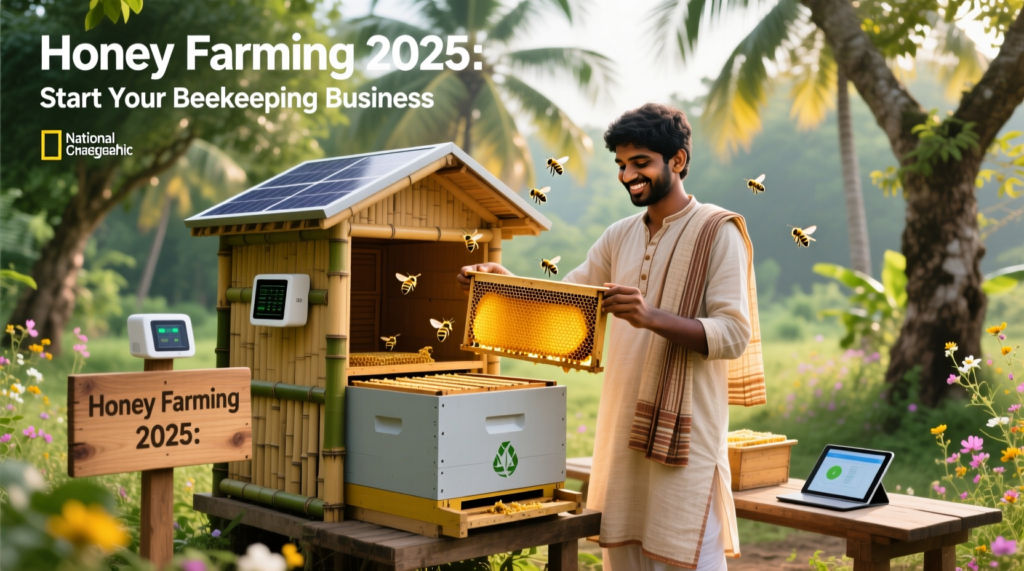
Honey Farming in India: How to Start & Succeed in 2025
There’s a quiet, buzzing revolution happening in the rural and even urban landscapes of India. It’s not led by tech giants or startups, but by tiny, six-legged marvels – the honey bees. Honey farming, or apiculture, is no longer just a traditional practice; it’s a booming agri-business opportunity with immense potential.
Imagine turning sunlight, flora, and the industrious work of bees into golden, liquid gold. That’s the promise of beekeeping. With India’s diverse climatic zones and rich flora, the country is a perfect playground for this venture. The demand for pure, organic honey is skyrocketing, not just as a sweetener but as a superfood, and the government is actively promoting it through various subsidies.
If you’ve ever wondered how to tap into this sweet opportunity, you’ve come to the right place. This isn’t just an article; it’s your comprehensive roadmap. We’ll walk you through every single step, from understanding the “why” to mastering the “how,” with real data and a 2025 perspective. So, let’s put on our bee suits and dive in!
- Why Honey Farming is the Sweetest Opportunity in 2025
Before we get into the nuts and bolts, let’s talk about why this is such a compelling business, especially now.
1.1. Booming Market Demand: It’s Not Just Honey Anymore!
The global honey market is buzzing,and India is a significant part of it. Here’s why:
· Health Consciousness: Post-pandemic, Indians are more health-aware than ever. Honey is a natural immunity booster, a healthier sugar alternative, and a key ingredient in Ayurvedic and natural wellness products.
· The Rise of Organic: The demand for certified organic, pure, and raw honey has exploded. Supermarkets and online platforms are filled with brands, but the supply of genuinely pure honey often struggles to keep up.
· Industrial Use: Honey isn’t just for your kitchen shelf. It’s widely used in pharmaceuticals (for cough syrups), cosmetics (in face creams and lotions), and the food processing industry.
1.2. The Government is Your Friend: Subsidies & Schemes
The Government of India,through the National Bee Board (NBB) and various state agriculture departments, is aggressively promoting beekeeping as a source of additional income for farmers.
· Atal Bhujal Yojana and Mission for Integrated Development of Horticulture (MIDH): These schemes often have components that subsidize the cost of bee boxes and other equipment. Subsidies can range from 50% to 80% for specific farmer categories (like SC/ST, small & marginal farmers).
· The Sweetest Part? Beekeeping is recognized as a potent tool for increasing crop yield. Bees are the world’s most crucial pollinators. By placing bee boxes near your or your neighbors’ farms, you can increase the yield of fruits, vegetables, and oilseeds by up to 25-30%. This makes you not just a honey producer, but a partner in agriculture.
1.3. Low Investment, High Returns
Compared to dairy farming or poultry,the initial investment in beekeeping is relatively low. You don’t need vast tracts of land. A small corner in your backyard or terrace can be enough to start with a few boxes. The operational costs are also minimal once the initial setup is complete.
1.4. It’s Eco-Friendly
By becoming a beekeeper,you are directly contributing to biodiversity. You are helping in the pollination of plants, which supports a healthier ecosystem. It’s a business that gives back to the planet.
- Understanding the Buzzing Workforce: Bee Species in India
You can’t manage a team without knowing your team members, right? In India, primarily four species of honey bees are used for commercial beekeeping. Choosing the right one is your first critical decision.
2.1. The Italian Bee (Apis mellifera) – The Commercial Powerhouse
· Characteristics: This is the most popular choice for commercial beekeeping worldwide, including India. They are gentle, prolific honey producers, and have a strong tendency to build large colonies.
· Why Farmers Love Them: They are excellent for movable beekeeping. This means you can migrate your bee boxes to different regions based on the flowering season, ensuring a year-round honey flow. They are less likely to abandon their hive.
· Honey Yield: Very high. A well-managed colony can produce 35-50 kg of honey per year.
· Best For: Large-scale, commercial honey production.
2.2. The Indian Hive Bee (Apis cerana indica) – The Local Champion
· Characteristics: This native species is well-adapted to Indian climatic conditions. They are smaller, more agile, and better at defending themselves against pests like the wasp.
· Why Farmers Love Them: They are hardy and require less intensive management compared to the Italian bee. They are perfect for stationary beekeeping in areas with good floral diversity.
· Honey Yield: Moderate. A colony typically produces 8-10 kg of honey per year.
· Best For: Beginners and small-scale beekeepers, especially in forest-fringe areas.
2.3. The Rock Bee (Apis dorsata) – The Wild Giant
· Characteristics: These are giant, wild bees that build single, large combs on high tree branches, cliffs, or buildings. They are very aggressive and cannot be domesticated in conventional bee boxes.
· Role: Most of the forest honey collected by tribal communities comes from Rock Bees. It’s a dangerous profession, and the honey is often sold at a premium.
2.4. The Dammer Bee or Stingless Bee (Tetragonula iridipennis) – The Tiny Treasure
· Characteristics: As the name suggests, these are very small, stingless bees. They produce a unique, sour-sweet honey that is highly valued for its medicinal properties.
· Why It’s Gaining Popularity: The honey, known as Madhu Makshika in Ayurveda, is sold at a very high price (often Rs. 2,000 – Rs. 5,000 per kg). They can be kept in small boxes and are perfect for urban settings or as a niche product.
· Honey Yield: Very low (only 300-500 grams per year per colony) but extremely high value.
· Best For: Niche, premium honey production and pollination in greenhouses.
Of course! Here is Part 2 of your comprehensive guide to honey farming in India.
Honey Farming in India: How to Start & Succeed in 2025
(Part 2 of a 5-Part Series)
Welcome back, future apiarist! In Part 1, we got you excited about the why and introduced you to the star performers—the different bee species. Now, it’s time to roll up our sleeves and get down to the nitty-gritty. Every successful venture starts with a solid plan and a clear understanding of the investment.
This section is all about the groundwork. We’re going to build your beekeeping business from the ground up, starting with the numbers and the initial setup. Let’s turn that buzz into a business plan!
- Crafting Your Beekeeping Business Plan & Understanding the Cost
A business without a plan is just a hobby. Let’s make sure your honey farming is a thriving business.
3.1. The One-Page Business Plan for Your Honey Farm
You don’t need a 100-page document.Just answer these questions clearly:
· Your Mission: What is your goal? (e.g., “To produce 1000 kg of pure, organic honey in the first year and sell directly to health-conscious consumers in my city.”)
· Scale: Are you starting as a side business (10-25 boxes) or going commercial (50-100+ boxes)?
· Products: Will you sell only raw honey? Or will you expand to beeswax, pollen, propolis, or live colony sales later?
· Market: Who will buy your honey? (Local shops, supermarkets, online platforms, direct customers at farmers’ markets?).
· Unique Selling Point (USP): What makes your honey special? (Is it organic? From a specific floral source like litchi or sunflower? Direct-from-farm traceability?).
3.2. The Real Cost of Starting a Honey Farm in 2025
Let’s talk numbers.Costs can vary by region, but here’s a realistic breakdown for a small-scale start with 10 Bee Boxes (colonies) using Italian Bees.
Note: These are approximate figures. It’s crucial to get local quotes.
Item Quantity Estimated Cost (in INR) Notes
Bee Boxes (Langstroth Hive) 10 Sets 15,000 – 20,000 Includes chambers, frames, and foundation sheets.
Protective Gear 1 Set 2,000 – 3,000 Bee suit, gloves, and veil. Don’t compromise here.
Essential Tools 1 Set 2,000 – 3,000 Smoker, hive tool, bee brush, uncapping knife.
Live Bee Colonies 10 Colonies 10,000 – 15,000 Cost per colony is ₹1,000 – ₹1,500.
Miscellaneous & Contingency – 3,000 – 5,000 For transport, feeders, medicines, etc.
Total Initial Investment ₹32,000 – ₹46,000
The Subsidy Factor: Remember the government schemes we discussed? If you qualify, you could get a 50% subsidy on the bee boxes and tools. This could bring your initial investment down to as low as ₹20,000 – ₹25,000 for a 10-box setup. Contact your local District Agriculture Officer or the National Bee Board (NBB) for exact details.
3.3. The Profit Potential
Now,for the sweet part! Let’s do a conservative first-year calculation:
· Honey Production: A healthy Italian bee colony can give you 15-20 kg of honey in its first year (with multiple harvests). Let’s take a conservative 15 kg per colony.
· Total Honey = 10 colonies x 15 kg = 150 kg
· Revenue:
· Selling price for pure, raw honey can range from ₹400 – ₹800 per kg depending on packaging and marketing. Let’s take an average of ₹500/kg.
· Total Revenue = 150 kg x ₹500 = ₹75,000
· Profit:
· Profit = Revenue (₹75,000) – Initial Investment (let’s take the higher end, ₹46,000) = ~₹29,000 in the first year.
Remember, the initial cost is a one-time investment. In the second year, your profit potential jumps significantly as you only have maintenance costs, and your existing colonies can be split to create new ones!
- Your Step-by-Step Guide to Starting Your Apiary
You have the plan and the numbers. Now, let’s walk through the actual steps to get your first bees buzzing.
4.1. Step 1: Training is Non-Negotiable
Please,do not skip this. Beekeeping is a skill.
· Where to Learn?
· KVKs (Krishi Vigyan Kendras): Almost every district in India has a KVK that regularly conducts low-cost or free beekeeping training programs.
· National Bee Board (NBB): They offer training and resources. Check their website.
· Apprenticeship: The best way to learn is to work with an experienced beekeeper in your area for a few weeks. You’ll learn practical, hands-on skills that no book can teach you.
4.2. Step 2: Selecting the Perfect Site for Your Bee Boxes (Apiary)
Bees need a good neighborhood.Here’s what to look for:
· Flora, Flora, Flora! The single most important factor. Your apiary should be within a 2-3 km radius of abundant nectar and pollen-rich plants. Look for areas near mustard, sunflower, litchi, mango, coconut, or forest areas with wild flora.
· Water Source: Bees need clean water. Ensure there’s a small stream, pond, or create an artificial water source with pebbles (so they don’t drown).
· Shelter & Orientation: Place the boxes under scattered trees for shade. The hive entrance should face East or South-East to get the gentle morning sun, which encourages bees to start their day early.
· Safety & Accessibility: The site should be safe from vandalism, flooding, and pesticide drift from nearby farms. It should also be easily accessible for you to manage the boxes.
4.3. Step 3: Procuring Equipment and Bees
· Equipment: Buy your bee boxes, suit, and tools from a reputable manufacturer. The Langstroth hive is the standard and most recommended.
· The Bees (The “Seed”): Source your live colonies from a government-approved bee farm or a trusted, disease-free private breeder. Ask for advice from your local KVK. They will usually know the best sources. Transport the colonies carefully, preferably during the cooler evening hours.
4.4. Step 4: Setting Up Your First Hives
· Arrangement: Place the hive boxes on stands (bricks or wooden stands) to protect them from ants, moisture, and other pests. Maintain a distance of about 6-10 feet between two hives.
· The Grand Entry: Once you place the box at its designated spot, gently open the hive entrance and let the bees acclimatize to their new home. It’s best to do this in the late evening to minimize bee loss and confusion.
· Feed them: For the first few days, especially if there isn’t a major nectar flow, feed the bees a 1:1 sugar syrup (one part sugar, one part water) to help them draw out the honeycomb on the foundation sheets.
